
In the Philippines, feeding a rising population and stabilizing prices has increasingly required more than fertile land and favorable weather. The conversation around food security is moving toward a broader, technology-enabled framework — a lens we can call beyond Food Philippines — that ties farmers to markets, and markets to data, through digital infrastructures and policy choices that shape resilience across the chain.
Setting a broader frame: why beyond Food Philippines matters
The archipelago’s food system sits at the intersection of climate risk, logistics complexity, and urban demand. Storms and floods routinely disrupt harvests and transportation, while fragmentation in regional markets can create price volatility from farm to fork. Import dependency for staples such as rice, and the uneven distribution of cold-chain facilities, amplify spoilage and waste. In this context, resilience is less about a single transition and more about a system that can sense, adapt, and respond in near real time. Digital infrastructure—connectivity, data platforms, and automated monitoring—offers a way to collapse information gaps that have long hampered smallholders and regional distributors. The Philippines is a natural test case for how data-driven approaches can compress time-to-decision, align production with demand signals, and reduce losses in the post-harvest pipeline, especially when climate shocks intensify.
Viewed through this lens, the discussion extends beyond agricultural yields to the reliability of the entire food corridor: inputs for farming, processing capacities, storage, logistics, and retail. For policymakers and businesses, the question becomes how to align incentives, finance, and governance to sustain a path where data-informed decisions translate into lower prices for consumers and steadier incomes for producers. This framing also matters for international players in the tech and logistics space, because a resilient food system hinges on interoperable platforms, secure data sharing, and scalable models that can cross provincial boundaries.
Tech as a backbone: Huawei’s role in enabling resilient food logistics
Technology stacks that emphasize connectivity, data integrity, and intelligent analytics offer practical routes to resilience in a country with diverse geographies and uneven infrastructure. In this context, the type of capabilities associated with global digital platforms—edge computing, cloud services, Internet of Things sensors, and AI-driven forecasting—can retool how food moves from farm to market. For example, sensors deployed along supply chains can monitor temperature and humidity in real time, flagging deviations that could lead to spoilage or waste. Cloud dashboards can synthesize demand signals from urban centers with harvest forecasts from rural provinces, enabling more precise procurement and distribution planning. Advanced analytics, when combined with urban-rural logistics networks, can reduce stockouts in markets that previously faced inconsistent deliveries.
Within a broader Huawei-enabled ecosystem, the potential benefits are not merely operational. They include scalable digital identities for products and farmers, traceability from source to consumer, and secure connectivity that supports microfinance and digitized payments for smallholders. Yet these advantages depend on deliberate design choices: open interfaces that enable interoperable data sharing, robust cybersecurity, and privacy protections that earn trust among farmers and traders. The Philippines would need to pair such technology with local capacity-building, ensuring that smaller players can adopt, operate, and benefit from these tools without being edged out by larger entrants.
In practice, this means pilots that couple sensor networks and mobile reporting with government data repositories and private-sector forecasting models. It also means building a talent base—data scientists, network engineers, and field technicians—who can maintain and scale these systems across diverse provinces. The objective is not a glossy showcase of gadgets, but a repeatable, cost-effective model that widens the circle of participants who can use data to reduce spoilage, improve forecasting, and tighten the delivery timeline from farm gates to urban kitchens.
Challenges, policy, and market dynamics
Despite the promise, several friction points can slow progress. First, rural connectivity remains uneven. While 5G and LTE networks expand, remote islands and remote villages may still lag in bandwidth and reliability, which constrains real-time data collection and monitoring. Second, data governance and privacy considerations require clear rules about who owns data, who can access it, and how it can be used for pricing, credit, and insurance services. Without transparent governance, trust in digital systems can erode, undermining adoption at the scales required for meaningful resilience gains. Third, financing and the economics of scaling matter. Smallholders and local MSMEs often operate on thin margins and may lack the capital to invest in sensors, devices, or digital training without targeted financing and incentives. Finally, interoperability is a non-trivial barrier: different platforms, sensors, and logistics providers must be capable of exchanging data in common formats to generate a coherent view of the supply chain.
Policy design matters as much as technology. Regulatory sandboxes, public-private partnerships, and incentives for cold-chain investment can accelerate adoption. Data standards and certification regimes can help prevent vendor lock-in and ensure that digital improvements translate into real, measurable outcomes for price stability and food security. The Philippine government, along with development partners, can catalyze these changes by prioritizing rural connectivity, supporting pilot programs that address local bottlenecks, and creating clear governance frameworks that balance innovation with consumer protections.
Paths forward: scenarios for 2026–2030
Looking ahead, three plausible trajectories illustrate how the interplay of technology, policy, and market incentives could unfold in the Philippines. Each scenario centers on a core assumption about the pace and coordination of adoption across public, private, and civil sectors.
Scenario A: Steady digitization with targeted investments. In this path, selective government programs seed digital infrastructure in key corridors and ports, while private firms deploy scalable solutions in major urban markets. Cold-chain and logistics platforms mature, enabling more predictable distribution and price stability. Producers and retailers gradually adopt digital payments and traceability, reducing post-harvest losses and enabling credit access tied to data histories. The outcome is a stepwise improvement in resilience, with manageable risk of uneven benefits across provinces.
Scenario B: Fragmented adoption and coordination gaps. Without a coherent nationwide strategy, adoption is uneven. Some provinces experience rapid gains from technology-enabled logistics, while others lag due to connectivity, financing, or regulatory friction. Market fragmentation persists, and price volatility can persist in underserved regions. The risk of data silos increases, limiting the potential for cross-provincial forecasting and welfare gains. This path underscores the need for a unified policy framework and interoperable platforms that can bring disparate actors into a shared data ecosystem.
Scenario C: Acceleration through public-private partnerships and regional hubs. This more ambitious path features aligned incentives across government agencies, telecoms, agribusinesses, and financiers. Regional hubs develop as centers of data-enabled logistics, with robust cold-chain networks, trusted digital identities for produce, and microfinance products linked to traceability data. The benefits could include sharper price stability, reduced waste, and better livelihoods for farmers who can access markets more reliably. However, success hinges on careful governance, strong cyber protections, and sustained investment in human capital.
Regardless of the path, the core drivers remain the same: reliable connectivity, interoperable data ecosystems, credible governance, and financing mechanisms that align incentives across the value chain. A tech-forward approach does not guarantee automatic resilience, but it substantially raises the probability that shocks will be detected earlier, responses will be coordinated more quickly, and losses will be minimized. In that sense, the journey beyond Food Philippines is as much about building trust, capacity, and institutions as it is about deploying sensors and dashboards.
Actionable Takeaways
- Governments should prioritize rural connectivity upgrades and establish interoperable data standards to enable cross-provincial forecasting and coordination.
- Public-private partnerships should link cold-chain investments with accessible financing, ensuring smallholders can adopt sensors, digital payments, and traceability tools.
- Cybersecurity and data governance frameworks must accompany digital tools to protect privacy and build stakeholder trust in data-driven decisions.
- Pilot programs should unite farmers, processors, retailers, and logistics providers under shared platforms to demonstrate scalable resilience models.
- Capacity-building initiatives are essential—training technicians, data scientists, and operators will sustain long-term adoption and value realization.
Source Context
Contextual perspectives from global industry reporting provide analogs for how food systems interact with energy, policy, and trade. While not Philippines-specific, these sources illuminate the broader dynamics of risk and resilience in global food supply chains:
Image concept
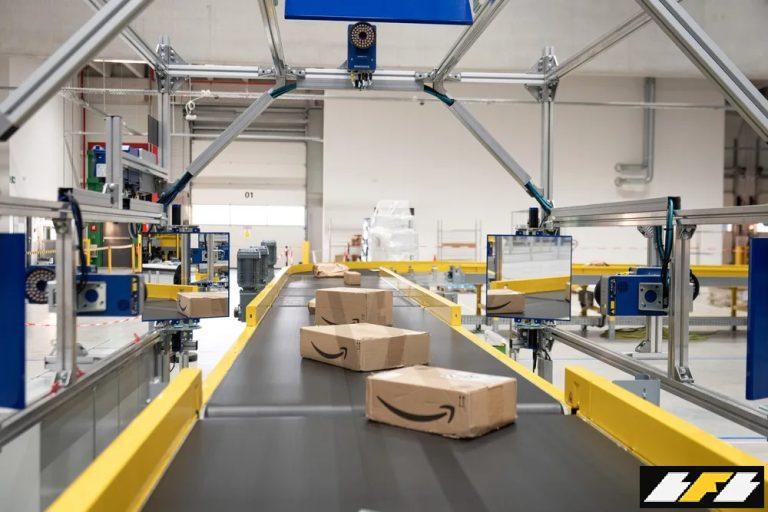
Image prompt: A high-resolution photo of a Philippine urban logistics hub with sensors, digital displays, and a person reviewing data on a tablet, symbolizing tech-enabled food resilience.
Image alt: Digital logistics hub in the Philippines with sensor networks and data displays.