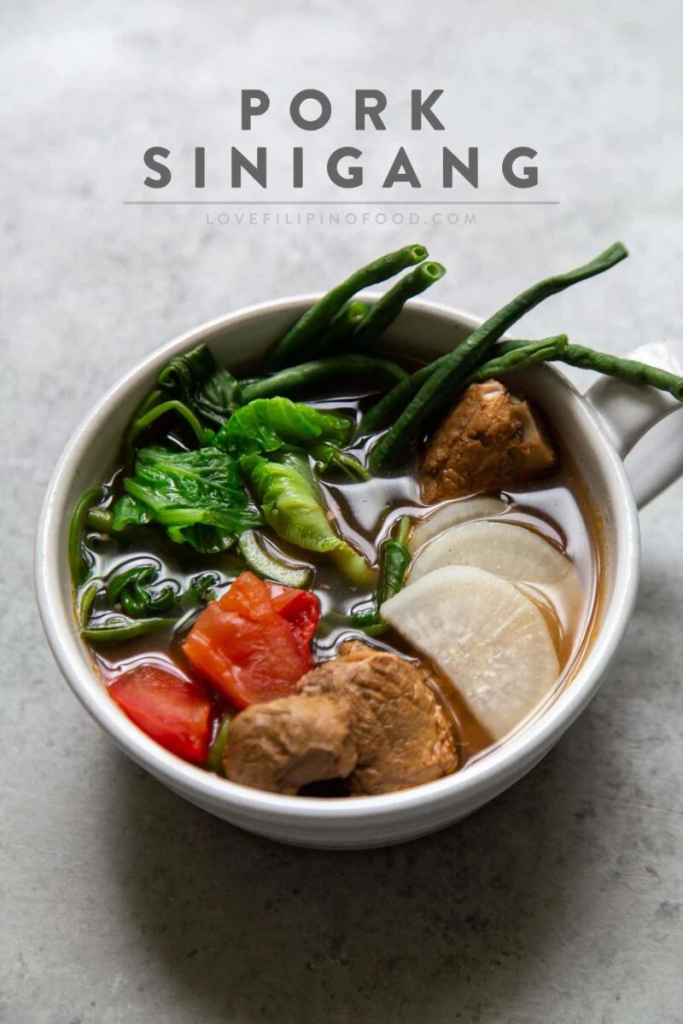
Pork Sinigang🌈
Updated: April 8, 2026
Pork Sinigang or sinigang baboy is a sour soup from the Tagalog region of the Philippines. This version is made with tamarind. It features stewed meat with a variety of vegetables.
Sinigang can be made using a variety of different meats and vegetables. Pork, beef, shrimp, and fish are the most common proteins used.
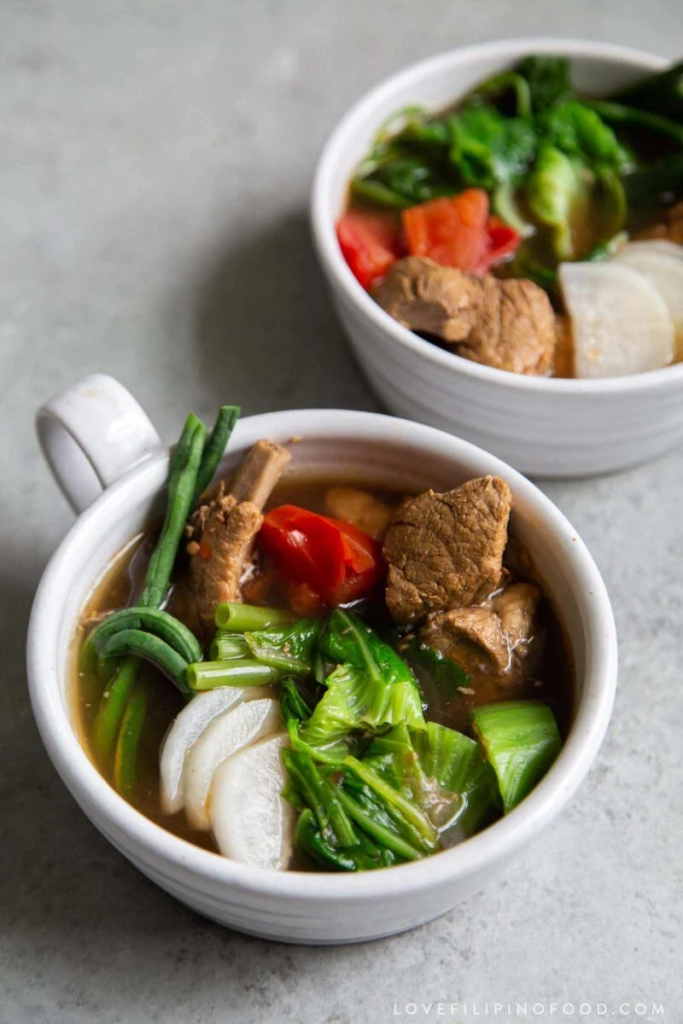
Pork Sinigang or sinigang baboy is a sour soup from the Tagalog region of the Philippines. This version is made with tamarind. It features stewed meat with a variety of vegetables.
Sinigang na baboy
This version of pork sinigang is made using a mixture of pork ribs and pork shoulder.
Pork shoulder (also known as picnic shoulder) or pork butt are perfect for this recipe. Both cuts of meat are rather tough and fatty. Both benefit from long, slow cooking making them an ideal choice for this stew dish.
Boston butt is another great option. This cut refers to the meat that includes both the shoulder and butt.
Why include a mixture of bone and meat?
Bones provide a ton of flavor! Bones are also very rich in nutrients. (Which is why bone broth soup has gained popularity over the last 5 years!)
Any kind of pork ribs will work: spareribs, baby back ribs, St. Louis-style ribs, etc. If you buy these at an Asian supermarket, it’s likely that it will simply be labeled as “pork ribs.”
Soup Souring Agents
Sampalok or green unripe tamarind is the most common souring agent used. Other fruit options include: calamansi, green mango, santol (cotton fruit), or bayabas (guava).
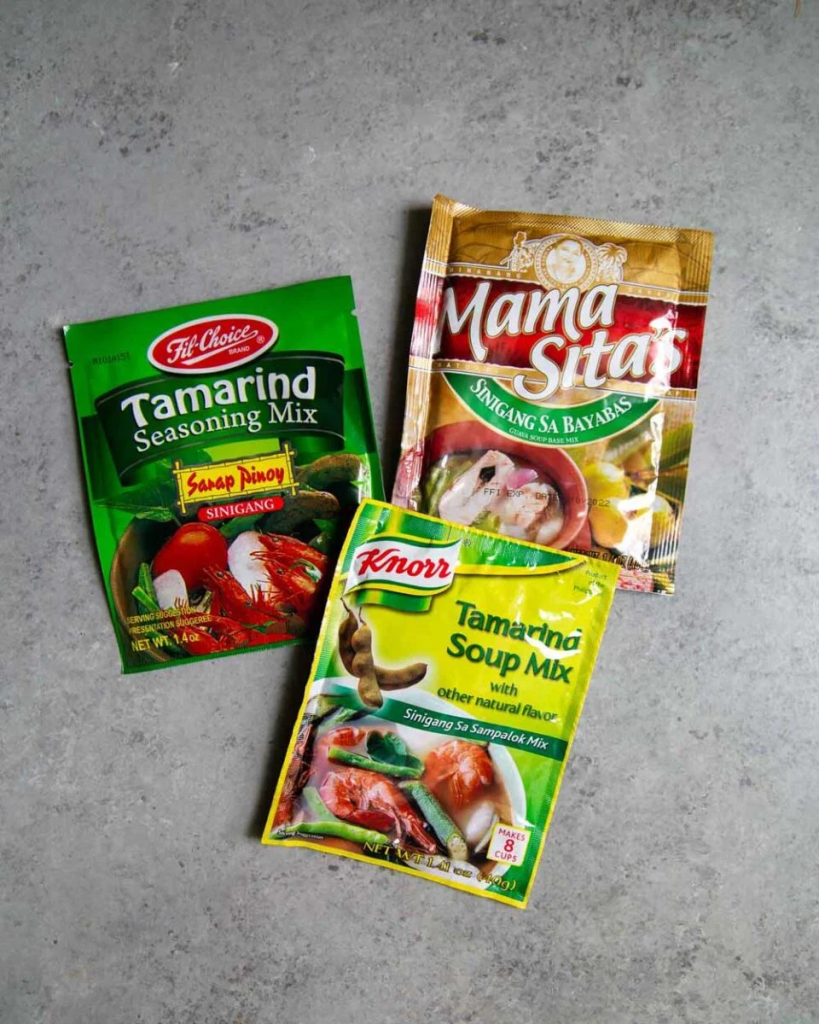
Packaged Soup Base Mixes
Filipino supermarkets (like Seafood City and Pacific Islander) have an entire wall full of powdered mixes for soups and stews. More recently, I have also started seeing these mixes in the Asian section of American supermarkets (Vons and Ralphs).
Of course, these mixes can also be purchased online.
Mama Sita’s, Knorr, and Fil-Choice Brand are the most commonly available brands. They offer several different souring agent options. The mixes above feature sampalok (tamarind) and bayabas (guava).
These powdered soup mixes are very easy to use. However, they do contain a ton of sodium, monosodium glutamate (MSG), and additional preservatives.
Many brands also contain shrimp powder. Therefore, the packaged mixes are not a good option for those with shellfish allergies.
For those reasons, I prefer to use the organic tamarind paste photographed below.
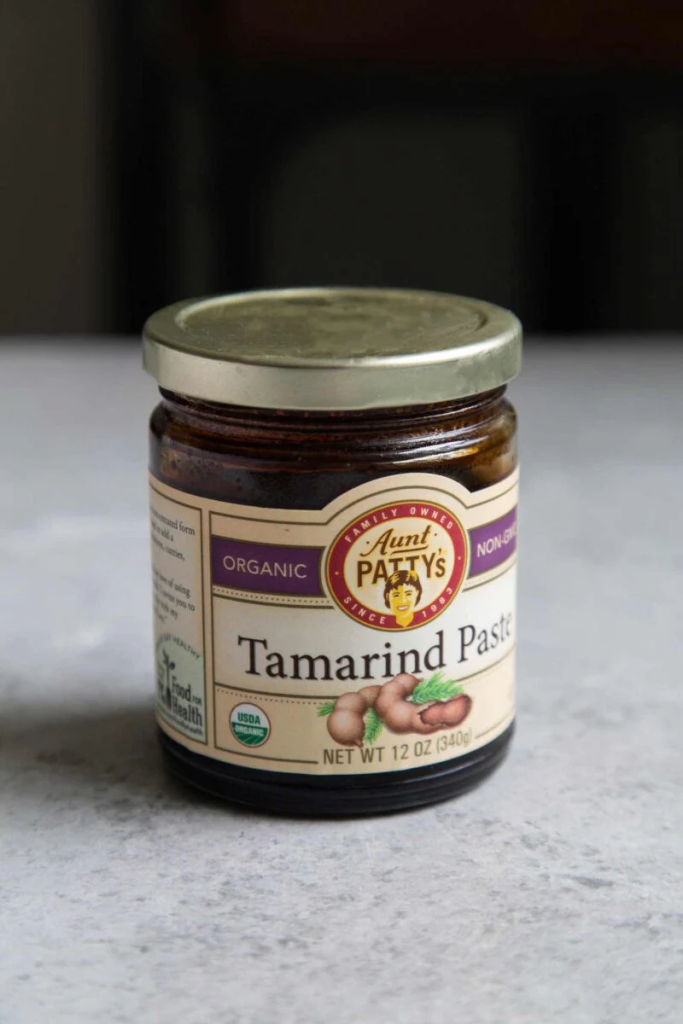
Tamarind Paste
I’m a fan of the tamarind paste photographed above. Aunt Patty’s Tamarind Paste is available at Sprouts and Whole Foods Market. Several of my local supermarkets (Ralphs, Vons, and Albertsons) also carry this product.
This paste just has one ingredient: tamarind pulp!
NOTE: Aunt Patty’s has recently changed their packaging. It is now labeled as GloryBee Organic Tamarind Puree.
Asian supermarkets (especially Thai and Indian markets) have an abundance of tamarind paste, puree, and powder options.
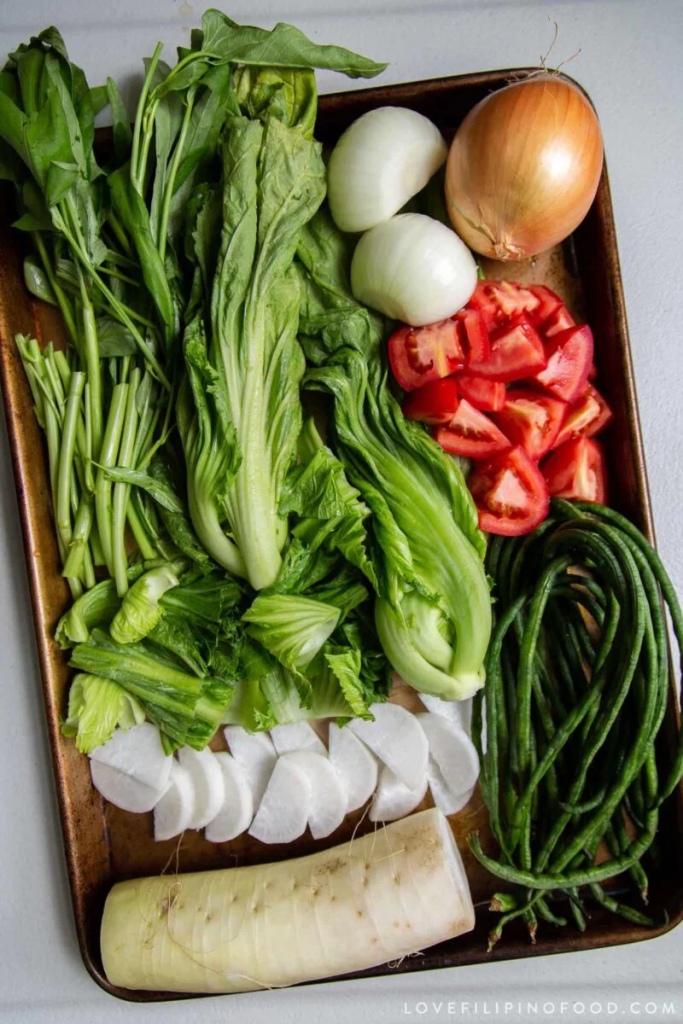
Vegetable Options
Asides from the stewed protein, sinigang is known for its abundance of vegetables. Onion and tomato are staple flavoring agents. The onions provide a rounded sweetness to the soup, while the tomato adds umami and color.
More readily available American options:
- Bok Choy
- Green bean
- Young broccoli or broccolini
- Swiss chard
- Collard Greens
- Zucchini
How to cook stove top pork singigang
To start, you need a large stock pot (preferably 10 to 12 quarts in size) and a heat source (stove, induction burner, or open fire).
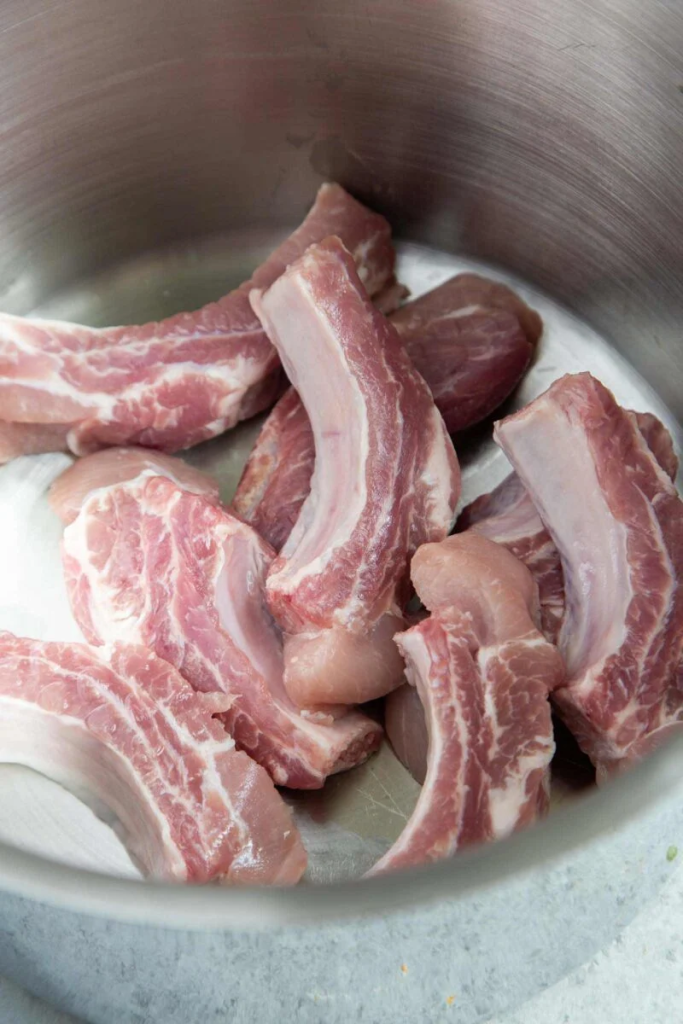
- Place the pork ribs in the stock pot. Top with cool water. It’s better to err on the side of more water at this point. Bring to a boil. Boil for 10 minutes to release pork bone impurities. Skim any foam or fat that may rise to the surface.
- Then, add pork butt chunks. Continue to boil for another 5 minutes. Drain ribs and meat. Discard water. Rinse out any impurities or dirty bits that may have stuck to the pot.
- Place par-cooked ribs and meats back into the clean stock pot. Cover with 12 cups of cool water. *see TIP BOX below!
- Add quartered tomato and onion. Bring mixture to a boil. Reduce heat and simmer for 30-40 minutes until rib bone meat and pork chunks are tender.
- Add desired vegetables. Simmer until vegetables have softened. *see tips for vegetable cooking time below
- Stir in tamarind paste. Season with salt to taste. Simmer for additional 3-5 minutes. Serve HOT with rice.
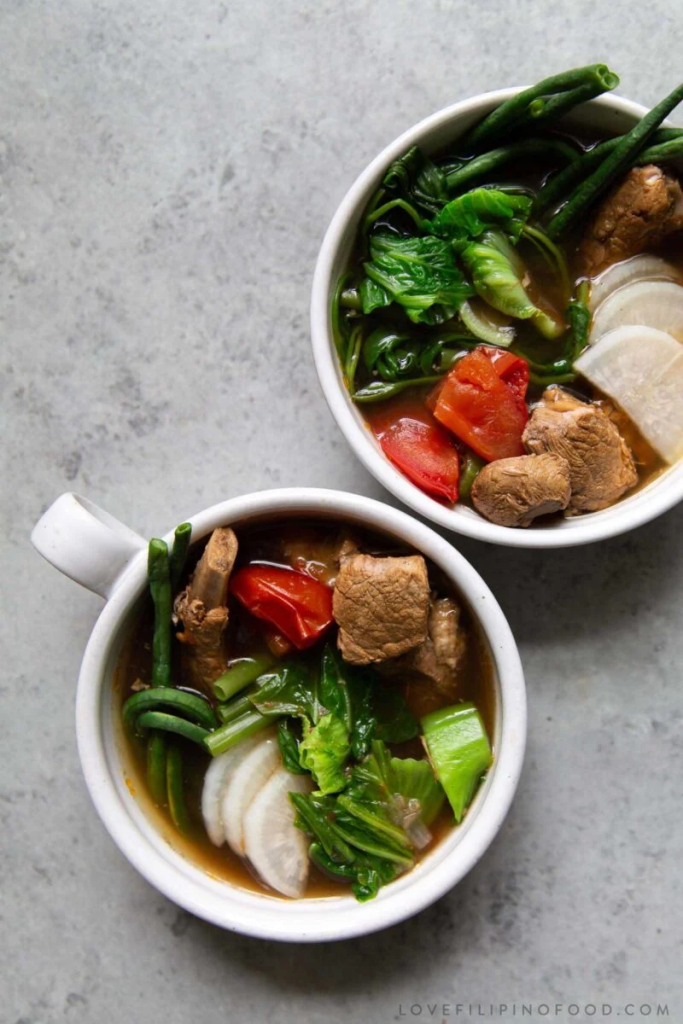
Notes Regarding Vegetable Cooking Times:
Vegetables cook at different rates. Cook the thicker, heartier vegetables first. Add delicate greens towards the end.
Long cooking:
- Gabi (taro) 20-25 minutes
- Labanos (white radish) 10-15 minutes
- Talong (eggplant) 10-15 minutes
- Sitaw (yardlong bean) 8-10 minutes
- Okra 8-10 minutes
Fast Cooking (5 minutes or less):
- kangkong (water spinach)
- mustasa (mustard greens)
- bok choy
ppff.com: Plataforma Chhttps://ppffbet.com.br/eia de Ação, Jogos Vibrantes e Bônus Para Jogar Sem Parar